If Culture Were Our Foundation, Much Would Be Different and Better
Varvara Loyko, artistic director and founder of the ZIMA Women’s Vocal Ensemble, speaks to Pobjeda about the ensemble’s performance at CANU
“We have a large number of universities, secondary schools and primary schools. Each of these institutions should have at least one choir, and there should also be a network of municipal choirs. Culture must be an everyday responsibility, not a project carried out from time to time,” Loyko emphasized.
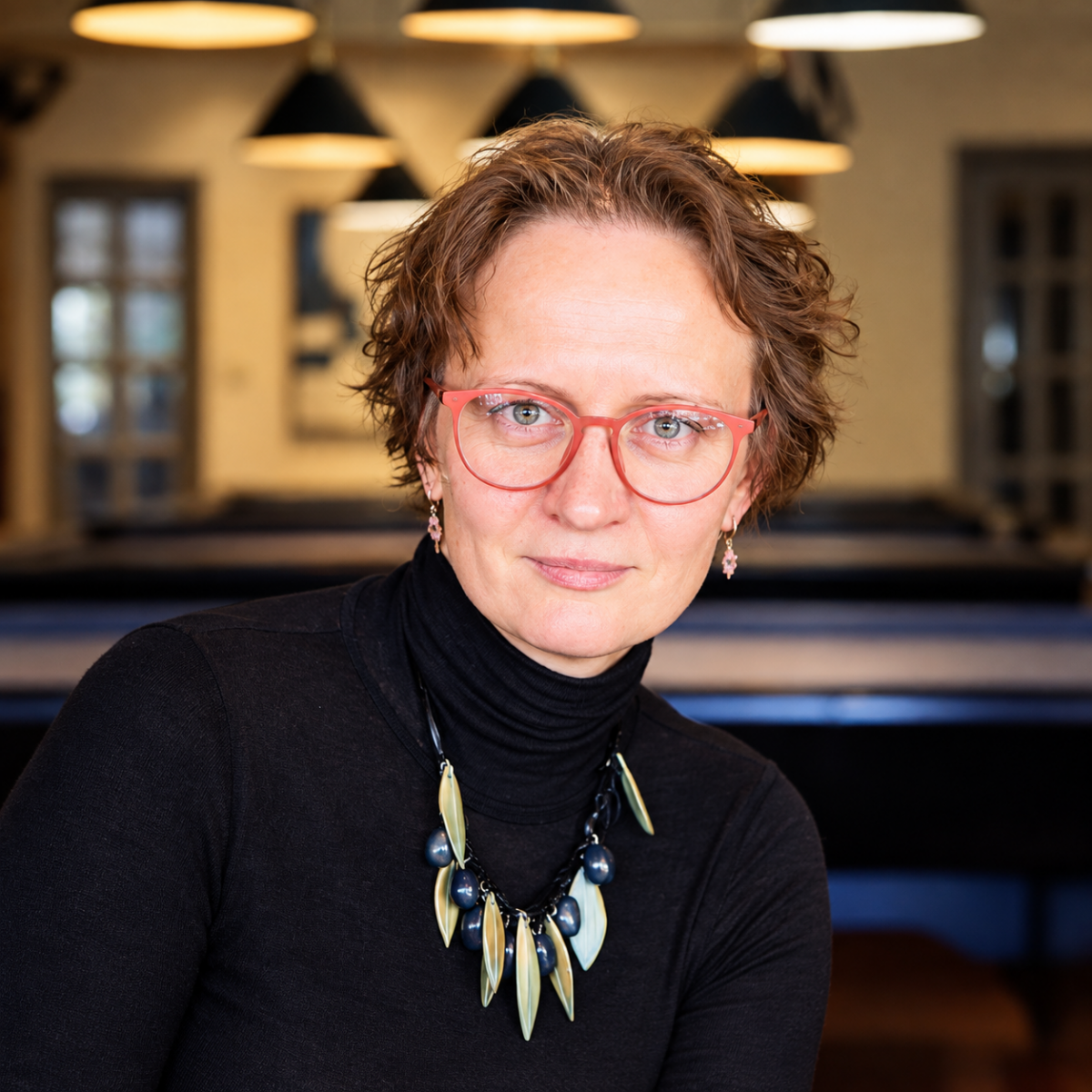
When people of different nationalities, languages, generations and cultural backgrounds begin singing together, their differences do not disappear, but they cease to be an obstacle. In a choir, everyone must preserve their own voice while also learning to listen to others, adapt and find their place within the collective whole. It is precisely this that Varvara Loyko, founder and artistic director of the Women’s Vocal Ensemble ZIMA from Bar, recognizes as one of the most important values of choral singing: its ability to bring people together and teach them a sense of community.
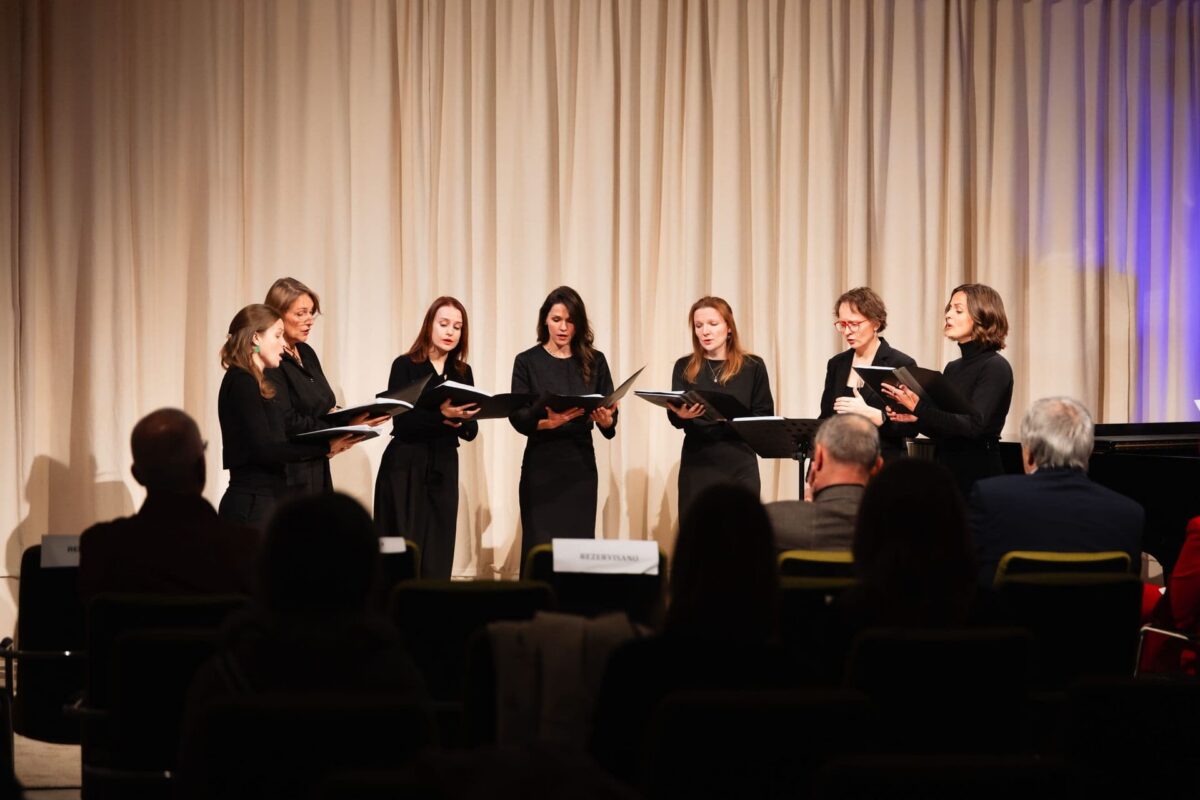
A concert by the seven-member Women’s Vocal Ensemble ZIMA from Bar was held at the Montenegrin Academy of Sciences and Arts. The program featured works by Labinski, Tormis, Victoria, Chesnokov, Grieg, Bach, Rheinberger, Rachmaninoff and Mendelssohn. ZIMA is one of the few ensembles of this kind to maintain an ongoing presence in the country. Its repertoire encompasses works from different periods, styles and traditions. Particular attention is given to sacred music and choral compositions in various languages. Formed in 2025 within the ZIMA Choral Studio in Bar, the ensemble made its debut in January this year at the Darovi Božića sacred music festival in Bar.
In her interview with Pobjeda, Loyko speaks about music as a universal language, the tradition of choral singing in Montenegro, the lack of systemic support, and the need for culture to stop being treated as an occasional project.
POBJEDA: ZIMA brings together people of different nationalities, languages, generations and cultural backgrounds. What happens when people who may have little in common in their everyday lives begin singing together?
LOYKO: They discover that they have a great deal in common. When we sing, boundaries disappear. A choir is an excellent model for how society can function: you have to remain an important part of the whole while also adapting to everyone else. It is important to find and establish your own role. I came to Montenegro 18 years ago, and the idea of founding a choir came to me ten years ago. I named it ZIMA because people used to come to me during that particular season and ask whether I could organise an interesting event.
POBJEDA: You have said that national differences gradually become almost irrelevant in a choir. Can the shared creation of art be an answer to societies that increasingly insist on divisions, identities and differences?
LOYKO: Everything begins with culture. If culture were our foundation, perhaps much would be different and better. In Montenegro, people are trying to convince us that a new reality of choral music exists. While countries in the region have a developed choral culture, a different model is emerging here and becoming the new normal. I do not think that is a good thing.
POBJEDA: When you speak about a different choral culture, what exactly do you mean?
LOYKO: First and foremost, I mean singing to playback and pre-recorded backing tracks. At its core, choral culture means acoustic, classically trained singing, and in that respect I would say it is close to the tradition of church choirs. Over the past few years, we have seen an increase in the number of choirs in Montenegro, and I am very happy about that. The revival of the Stanko Dragojević Choir in Podgorica is one of the best developments in Montenegrin culture.
That does not mean we should fail to keep up with modern times, but it is difficult to build something of quality without solid foundations. Academic and classical music should form the basis of choral culture.
Culture everywhere in the world is dependent on politics, and that disappoints me enormously. It should not depend on anything — culture should stand above all of that. We often think that certain things are unimportant, that we can easily get by without music, for example. Of course, there are things we cannot live without — food, money and so on — but life is also made up of things we call “unimportant”, such as music. I believe music is essential to us. We also need those seemingly insignificant things: hugs, kisses and closeness.
POBJEDA: How do you choose your repertoire?
LOYKO: We are guided by two criteria. It is important to me that the repertoire is varied so that the choir can develop evenly. The second criterion is that I like the composition we are going to perform. Our repertoire most often consists of classical music and sacred compositions. Last year, as part of the Barski Ljetopis festival, we carried out a project dedicated to pop and rock music. We created as many as six arrangements so that we could perform several Montenegrin songs, including “Balerina”, in choral arrangements.
POBJEDA: You have said that a choir allows a person to become part of something greater than themselves without losing their own voice. Is this not also one of the most important lessons about how society should function?
LOYKO: A choir is one of the most democratic ways of involving people in society. I start from the assumption that every person can sing. The question is how they sing, how much time they can devote to it, and how willing they are to work on developing their voice.
To establish a choir, we do not need instruments or special premises. We need a conductor and people. We do not even need a piano, because most choirs sing a cappella. This is one of the best ways to bring music closer to people. It is very important that they participate directly, because this makes it much easier for them to become familiar with music and understand its significance.
POBJEDA: You perform songs in as many as 16 languages, making an effort to preserve the original language of each composition. How much can music teach us about another people’s culture, even when we do not understand the words we are singing?
LOYKO: We do not sing only in the languages spoken by the members of our choir. Our repertoire includes many compositions in Latin and Spanish, as well as numerous Christmas songs from Catalonia. Singing in different languages is a very interesting experience. Above all, it is a way of showing respect for the composer and coming closer to their idea.
Music reflects the culture of a people to a great extent. When we listen to Montenegrin songs, we notice that they are generally somewhat melancholic. In Russian music, we sense breadth; in Argentine music, rhythm…
Folk music emerged in entirely different circumstances — at a time when there was no artificial intelligence and no large choirs. People simply sat together and sang. That is precisely why there are so many arrangements of folk songs today. Folk music is the foundation of everything that comes later; it is our heritage, which we must preserve.
POBJEDA: You have warned that the tradition of choral singing is being lost, and that there once existed a much broader network of choirs attached to schools, universities and institutions. What have we lost with the disappearance of that system, and can the tradition be restored?
LOYKO: I believe that every school and university, as well as every municipality, should have its own choir. In this way, we could build the foundations for a professional choir at the national level. We need a thousand children involved in children’s choirs and at least 500 adults singing in different ensembles, so that we can identify 30 people among them for a national choir.
The system must be sustainable and continuous. This is what sustainable development means, and a choir is one of the best examples of such a model. We can hardly make a major breakthrough in figure skating, for example, because it requires enormous infrastructure. However, in choral singing, within five or ten years we could achieve a very good position and become much more visible, without the need for major investment.
What we need is investment in the professional development of choral conductors. In Russia, a choir is treated as a separate instrument. One person chooses the piano, another the violin, and another the choir. They study the choir as an instrument for five or seven years and become choral singers.
In Europe, 17 per cent of the population sing in different kinds of choirs. There are choirs attached to churches, schools, universities and other institutions. This is a culture that we should develop here as well.
POBJEDA: We have music schools in almost every town, but not enough choirs, orchestras and ensembles where people can continue making music after completing their formal education. Why does the education system fail to meet this need?
LOYKO: Most children’s choirs in music schools are at a very high level, but they are not treated as independent ensembles. Instead, they generally perform as part of school concerts.
Today, there are many competitions in which children could participate, but there is a lack of state support and a clear, centralised vision for the development of choral culture. One choir cannot solve this problem — Montenegro needs 100 or 200 choirs.
If we start from the idea of sustainability, we will see that such a system does not require a great deal of money. We already have the infrastructure; we simply do not use it for these purposes. If we organised choir festivals and showcases, every school would have an incentive to present its ensemble. Such competitions mean a great deal to children. They give them an opportunity to show what they can do, compare themselves with their peers and make progress.
POBJEDA: How realistic is it for Montenegro to have 100 choirs?
LOYKO: We have a large number of universities, secondary schools and primary schools. Each of these institutions should have at least one choir, and there should also be a network of municipal choirs.
Culture must be an everyday responsibility, not a project carried out from time to time. The Ministry of Culture and Media and the Ministry of Education should make choral culture one of their priorities.
A choir is one of the most democratic ways of bringing people together. Those who work in the cultural sector know very well how important this is. However, it is a long-term process that requires constant support, not occasional initiatives.
Artificial Intelligence Should Be Viewed as a Tool
POBJEDA: What is your view of music generated by artificial intelligence?
LOYKO: I do not believe it is necessarily a bad thing. We cannot stop progress, and it is obvious that artificial intelligence will take over a significant part of our work. Perhaps that is not necessarily bad, because it will free up time for us to devote ourselves to other things — for example, preparing a good meal for ourselves.
People have forgotten how to crochet, sew and have hobbies. Fewer and fewer people pursue such activities. Artificial intelligence should be viewed as a tool, not as something we necessarily need to be afraid of.
Source: Pobjeda, 31 October 2026. Author: Adrijana Đorović.
Original title: “Kada bi nam kultura bila temelj, mnogo toga bi bilo drugačije i bolje” (“If Culture Were Our Foundation, Much Would Be Different and Better”).